EPDM compounds has long been valued by manufacturers for its resistance to weathering, liquid, heat, and overall strength. Seals, gaskets, hoses, and roofing membranes all rely on EPDM’s durability and flexibility across a wide temperature range. However, as end-use requirements become more demanding, manufacturers increasingly face challenges when working with standard EPDM compounds. Achieving consistent performance, reliable processing, and targeted functional properties often requires more than the base polymer alone.
This is where EPDM-based nanomaterial concentrates play a growing role, offering a practical way to fine-tune compound behaviour without extensive reformulation.
The Limitations of Standard EPDM Formulations
While EPDM offers excellent baseline properties, it is rarely used without modification. In real-world applications, manufacturers frequently need improved mechanical strength, better abrasion resistance, controlled electrical behaviour, or enhanced long-term stability. But meeting these requirements through traditional compounding can be complex.

One recurring issue is dispersion. Fillers and functional additives must be evenly distributed throughout the elastomer matrix to deliver predictable performance. Poor dispersion can lead to weak points in finished parts, inconsistent mechanical properties, and higher scrap rates.
Processing efficiency is another concern, as variations in mixing behaviour, viscosity, or scorch safety can disrupt production schedules and waste valuable feedstocks, particularly in high-volume manufacturing environments where consistency is commercially critical.
The Role of EPDM Nanomaterial Concentrates
EPDM nanomaterial concentrates are designed to address these challenges by supplying functional additives pre-dispersed in an EPDM carrier. Instead of adding multiple components separately during mixing, manufacturers can incorporate a single, homogeneous feedstock into their base compound.
This approach offers several practical advantages for elastomer processors:
· Improved dispersion of functional components, leading to more uniform mechanical and physical properties.
· Greater batch-to-batch consistency, reducing quality deviations in finished products.
· Simplified formulation development, as nanomaterial concentrates can be developed by external nanotechnology specialists rather than formulating from scratch.
By using nanomaterial concentrates, manufacturers can focus on meeting the performance demands of their customers rather than managing complex additive formulations with conventional raw materials.
Understanding NANO AC EPDM-11
NANO AC EPDM-11 is an EPDM-based concentrate developed to support manufacturers seeking more control over elastomer performance. Containing 0.2 - 0.5 wt% carbon nanomaterials, supplied by NANO CHEMI GROUP (who support this webpage), the formulation can be either incorporated into existing EPDM systems as a ready-to-use finished compound or modified to suit specific requirements.
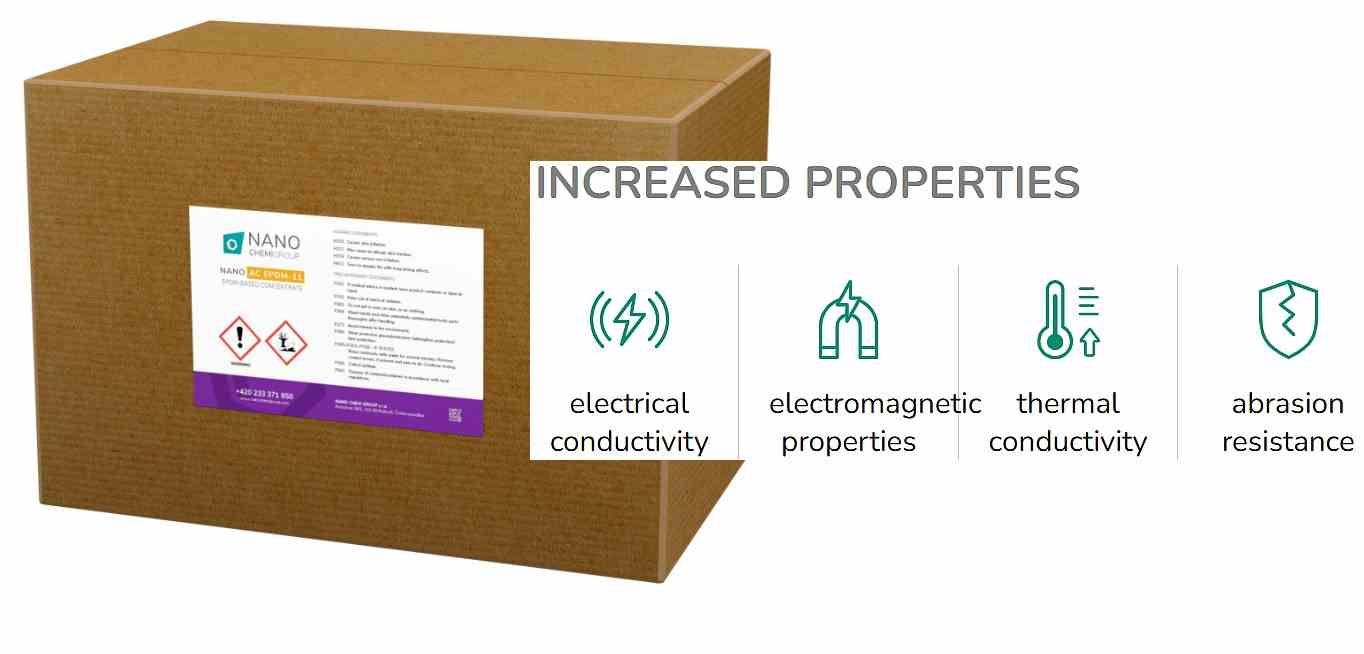
The key idea behind concentrates like NANO AC EPDM-11 is flexibility, as manufacturers can specify the properties they need to improve. This could be functional performance, such as mechanical strength, increased antistatic, dissipative or electroconductive properties, and/or thermal conductivity. Alternatively, behaviour during processing can be modified.
Once the desired properties are established, a nanomaterial concentrate is then designed which can be smoothly integrated into the base elastomer matrix, supporting those objectives without compromising compatibility or processing stability.
Related articles: Nanotechnology Powers Next-Generation Tyres or Plastic Regranulate Gains New Life from Nanomaterials
For manufacturers who produce technical goods from EPDM, this approach reduces formulation risk, as instead of introducing multiple raw additives with uncertain dispersion behaviours, the concentrate delivers a known, reproducible input into the compounding process.
This nanotechnology development can provide practical solutions to manufacturing. In automotive sealing profiles, for example, even minor variations in compound properties can affect sealing performance, durability, and noise behaviour. EPDM nanomaterial concentrates help stabilise these properties across production runs. Similarly, in industrial hoses and membranes, consistent abrasion resistance and ageing behaviour are essential for meeting service life expectations.
Another advantage of a ready-to-use nanomaterial concentrate like NANO AC EPDM-11 is scalability. Once the appropriate dosing level has been established, scaling from pilot batches to full production is a straightforward move.
Considerations when Introducing EPDM Nanomaterial Concentrates
Although EPDM concentrates simplify many aspects of formulation, they still require careful evaluation. Compatibility with the base EPDM grade, existing fillers, and curing systems must all be assessed. Laboratory testing remains an essential step to confirm that the desired property improvements are achieved without unintended side effects.
From a production perspective, concentrates are generally handled using standard mixing and dosing equipment, making them suitable for integration into established manufacturing lines. Clear technical communication between the compounder and material supplier is also important but is generally included if cooperating with an established and reputable nanotechnology provider.
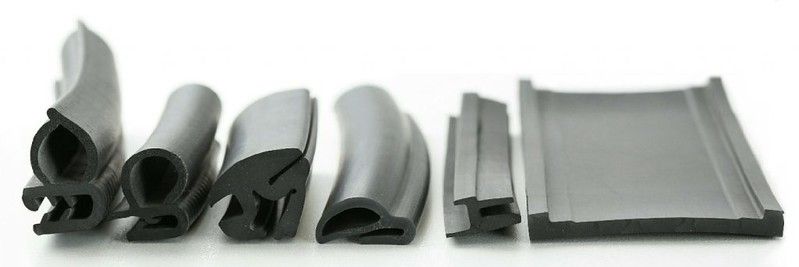
For many, nanotechnology remains largely a mystery, but it has become a key part of the continuing trend in evolving EPDM towards more specialised applications. Something which manufacturers are having to adapt to as they face increasing pressure to both deliver higher performance and greater consistency while also maximising cost control. To this end, EPDM-based nanomaterial concentrates such as NANO AC EPDM-11 reflect the broader shift in elastomer manufacturing towards smarter, more controlled formulation strategies.
Rather than replacing traditional compounding expertise, these materials support it by reducing variability and enabling targeted property enhancement. For manufacturers, this translates into more predictable processing, improved product reliability, and a stronger competitive position in demanding industrial markets.
To learn more about nanomaterial additives or to find out how a product like NANO AC EPDM-11 can improve industrial EPDM, contact info@nanochemigroup.cz or visit NANO CHEMI GROUP.
Photo credit: Wirestock, NANO CHEMI GROUP, Freepik, & Flickr